26-Inch Electric Bike Conversion Kits: What To Know
Converting your existing 26-inch bicycle into an electric one offers a compelling way to enhance your ride. A 26 inch electric bike kit can revitalize an older bike, presenting a more budget-friendly alternative to purchasing a new e-bike outright. However, this endeavor requires careful consideration of component compatibility, expected performance, and adherence to local regulations. This guide aims to provide the insights needed for an informed decision.
Evaluating a 26 Inch Electric Bike Kit for Your Needs
The primary advantage of a 26 inch electric bike kit is its potential to transform a familiar bicycle into a capable, assisted vehicle for commuting or recreation. When assessing these kits, several factors are crucial, particularly when comparing them to the purchase of a complete e-bike.
Key Decision Criteria: Power vs. Effort
A critical decision criterion for selecting a 26 inch electric bike kit hinges on your intended use and physical capacity. If your goal is to maintain a good workout while getting a little help on hills or longer distances, a lower-wattage motor (e.g., 250W to 500W) might suffice. This often translates to a lighter, more integrated feel. However, if you’re looking for significant power to tackle steep inclines effortlessly or to maximize speed on commutes, a higher-wattage motor (e.g., 750W to 1000W) will be necessary. This decision directly impacts battery size requirements, overall kit weight, and potential legal restrictions in your area.
Components and Compatibility: Building Your E-Bike
The effectiveness and seamless integration of a conversion kit depend heavily on its components and how well they match your existing bicycle.
Motor Types and Placement
Electric bike conversion kits primarily come in three motor configurations:
- Front Hub Motor: This is often the simplest to install, as it replaces your front wheel. It provides a balanced feel but can sometimes affect steering, especially with heavier batteries.
- Rear Hub Motor: Replacing your rear wheel, this offers better traction and a more traditional cycling feel. Installation can be slightly more complex due to gears and brakes.
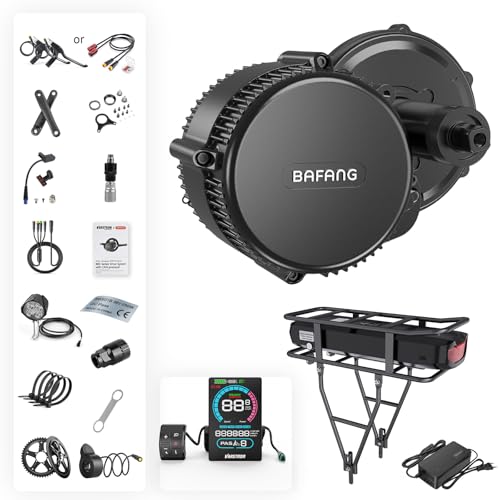
- Mid-Drive Motor: Mounted at the crankset, this type offers the most natural pedaling feel and efficient power transfer, leveraging your bike’s gears. However, it’s typically the most expensive and complex to install.
Battery Considerations
The battery is the heart of any electric bike. For a 26-inch wheel setup, common battery types are lithium-ion, offering a good balance of energy density and weight. Key specifications to consider include:
- Voltage (V): Affects power output and compatibility with the motor. Common voltages are 36V and 48V.
- Amp-Hours (Ah): Determines the battery’s capacity and, thus, its range. Higher Ah means longer riding distance.
- Watt-Hours (Wh): The product of Voltage and Amp-Hours (V x Ah), providing a more direct measure of total energy stored.
 Yose Power 48V 36V 10.4Ah 13Ah 15Ah 17.4Ah Ebike Battery Sliver Fish Electric Bike Battery 250W 350W 500W 700W 900W 1000W Electric Bicycle Lithium Batteris (Silver Color 36V13Ah for 0-750W Motor)Check price on AmazonWe may earn a commission
Other Essential Components
Beyond the motor and battery, a comprehensive kit usually includes:
- Controller: The “brain” that manages power flow between the battery, motor, and controls.
- Throttle or Pedal Assist Sensor (PAS): Allows you to control motor engagement. Throttles offer on-demand power, while PAS provides assistance as you pedal. Many kits offer both.
- Display: Shows speed, battery level, assist level, and other ride data.
- Brake Levers with Motor Cut-off: These levers stop the motor when you apply the brakes, a crucial safety feature.
- Wiring Harness: Connects all the components.
Performance and Practicality: What to Expect
The performance of a 26 inch electric bike kit can vary significantly based on the kit’s specifications and your bicycle’s build.
Range and Speed
- Range: This is highly dependent on battery capacity (Wh), motor efficiency, rider weight, terrain, and assist level. A common 48V 15Ah battery (720Wh) might provide anywhere from 20 to 50 miles of range. Verifying the manufacturer’s claims with real-world user reviews is advisable. For instance, a 500W rear hub motor kit paired with a 48V 15Ah battery on a flat urban commute might realistically achieve closer to 30-35 miles, not the advertised 50.
- Speed: Legal speed limits for e-bikes vary by region. Most kits are designed to comply with Class 1 (20 mph pedal assist only) or Class 3 (28 mph pedal assist) regulations. Higher wattage motors can achieve faster speeds, but always check local laws.
Weight and Handling
Adding a motor and battery will increase your bike’s overall weight, typically by 15-30 pounds. This can affect handling, especially at low speeds or when maneuvering the bike without power. Front hub motors can sometimes feel less balanced than rear hub or mid-drive systems.
Comparison Table: 26-Inch Electric Bike Conversion Kits
Here’s a look at how different types of 26-inch conversion kits might stack up:
| Feature | Front Hub Motor Kit | Rear Hub Motor Kit | Mid-Drive Motor Kit |
|---|---|---|---|
| Installation | Easiest | Moderate | Most Complex |
| Weight Dist. | Can be front-heavy | Balanced | Centralized, better handling |
| Traction | Good | Excellent | Excellent |
| Cost | Generally Lower | Moderate | Generally Higher |
| Typical Power | 250W – 750W | 500W – 1000W | 500W – 750W |
| Hill Climbing | Good | Very Good | Excellent |
Pros and Cons of Conversion Kits
Pros
- Cost-Effective: Often cheaper than buying a new e-bike.
- Familiarity: You get to keep a bike you already know and like.
- Customization: Choose components that best suit your needs.
- Sustainability: Repurposes an existing bicycle.
Cons
- Compatibility Issues: Not all bikes are suitable for conversion. Frame strength, brake type, and dropout width are critical. For example, older bikes with rim brakes might struggle to stop a faster, heavier e-bike effectively, necessitating an upgrade to disc brakes.
- Installation Complexity: Can be challenging for those with limited mechanical experience.
- Aesthetics: Kits can sometimes look “bolted on” rather than integrated.
- Warranty: Limited or no warranty on your original bike components.
- Legal Ambiguity: Ensure the kit complies with local e-bike laws.
Is a 26-Inch Electric Bike Kit Right for You?
Deciding whether a conversion kit is the best path forward involves assessing your current bicycle and your expectations.
Decision Checklist
Before purchasing, run through this checklist:
- [ ] Is my bicycle frame in good condition? (No cracks, rust, or significant damage)
- [ ] Does my bicycle have adequate braking power? (Disc brakes are highly recommended for e-bike conversions)
- [ ] Is the dropout width on my fork/rear triangle compatible with the hub motor? (This is a critical measurement; verify with kit specifications)
- [ ] Do I have the necessary tools and mechanical aptitude for installation, or access to a bike shop that offers conversion services?
- [ ] Does the kit’s power output and speed rating comply with local e-bike regulations?
- [ ] Is the battery capacity sufficient for my typical riding distances, factoring in real-world conditions?
Frequently Asked Questions
Q: Can any 26-inch bike be converted?
A: Not all bikes are ideal candidates. Bikes with weak frames, inadequate brakes (especially coaster brakes or very old rim brakes), or non-standard dropout widths may not be suitable or safe for conversion. It’s best to consult with a bike shop or the kit manufacturer if you’re unsure.
Q: What is the average cost of a 26 inch electric bike kit?
A: Prices can range from around $300 for basic front hub kits to over $1000 for more powerful mid-drive systems with larger batteries. The cost is highly dependent on motor wattage, battery capacity, and brand.
Q: How long does it take to install a conversion kit?
A: For someone with moderate mechanical skills, a basic front or rear hub motor kit might take 2-4 hours. More complex mid-drive installations or if you encounter unexpected issues can take significantly longer, potentially a full day.

Ryan Williams has spent over 8 years testing, repairing, and writing about electric bikes. He has personally ridden and reviewed 150+ e-bike models from brands like Lectric, Aventon, Rad Power, Super73, and dozens more.
Before founding EBIKE Delight, Ryan worked as a bicycle mechanic for 5 years at independent bike shops across California, where he specialized in e-bike conversions and electrical system diagnostics. He holds a Certificate in Electric Vehicle Technology from the Light Electric Vehicle Association (LEVA).
Ryan’s work has been cited by Electric Bike Report, Electrek, and BikeRumor. When he is not testing the latest e-bike on California backroads, he is in his workshop tearing down batteries and controllers to understand what makes them tick — and what makes them fail.
Areas of Expertise
E-bike performance testing and real-world range verificationBattery diagnostics, charging best practices, and safetyBrand comparisons: Lectric, Aventon, Rad Power, Super73, and moreError code troubleshooting across major e-bike systemsE-bike laws, registration, and compliance by state
Ryan believes every rider deserves honest, hands-on information — not marketing hype.