The Fastest Pedal-Assist Ebikes: Top Models Compared
When the open road calls and efficiency is paramount, the allure of a fast pedal-assist ebike is undeniable. These machines blend human power with electric torque to deliver exhilarating speeds, transforming commutes and recreational rides. But not all speed demons are created equal. Navigating the landscape of high-performance ebikes requires a discerning eye, focusing on not just raw velocity, but also reliability, rider experience, and the practicalities of urban mobility. This guide dissects the top contenders, helping you find the ebike that best aligns with your need for speed and your riding reality.
How this list was curated
This comparison of the fastest pedal-assist ebikes was assembled using a transparent, multi-factor approach:
- Performance Metrics (40%): Primary focus on reported top speeds (assisted and unassisted), acceleration capabilities, and motor power output. This forms the core of “fastest.”
- Component Quality & Durability (25%): Evaluation of motor brands (e.g., Bosch, Brose, Shimano), battery capacity and cycle life, frame construction, and braking systems. A fast ebike needs robust components to handle its performance.
- Rider Experience & Ergonomics (20%): Consideration of ride comfort, handling characteristics at speed, display interfaces, and overall user-friendliness.
- Regulatory Compliance & Practicality (10%): Assessment of whether models meet common Class 3 ebike standards (28 mph assist limit), availability of support, and suitability for varied urban terrains.
- Freshness & Market Presence (5%): Prioritizing models that are currently available and have a solid reputation, while also seeking out emerging or less-discussed options.
Top Contenders for the Fastest Pedal Ebike
Here’s a breakdown of the leading electric bikes that prioritize speed and performance, analyzed for their strengths and weaknesses.
1. Specialized Turbo Levo S-Works
Best for: Trail riders seeking maximum downhill speed and climbing assistance without compromising on off-road capability.
Skip if: You primarily need a commuter bike for paved urban roads; its mountain bike geometry might feel less efficient.
The Turbo Levo S-Works is a powerhouse, engineered for aggressive off-road use with a motor that provides seamless, powerful assistance up to its 28 mph limit. Its full-suspension design and premium components ensure stability and control even at high velocities on varied terrain. The trade-off for this extreme capability is a significant price tag and a weight that can be considerable for manual maneuvering.
2. Trek Domane+ SLR 7
Best for: Road cyclists who want to maintain pace with faster groups or conquer challenging climbs with significant electric support.
Skip if: Off-road adventures are your priority; this is a purebred road machine.
Trek’s Domane+ SLR 7 integrates a sophisticated electrical system into a lightweight, aerodynamic carbon fiber road frame. It offers a smooth, powerful assist that can help riders reach and sustain speeds of up to 28 mph, making it a formidable partner on long road rides or competitive outings. The limitation here is its specialized design, which offers little in the way of utility for cargo or non-paved surfaces.
3. Riese & Müller Supercharger2 GT Vario
Best for: Long-distance touring and commuting where sustained high speeds and carrying capacity are essential.
Skip if: You’re looking for a nimble, lightweight urban dart; its robust build prioritizes stability over agility.
This German-engineered ebike is built for endurance and versatility. With its powerful Bosch Performance Line Speed motor, it can comfortably assist riders up to 28 mph, and its dual battery option offers exceptional range. The integrated racks and comfortable riding position make it ideal for carrying gear on extended journeys. The trade-off for its robust build and extensive features is a higher cost and a heavier overall package.
4. Priority Bicycles Current
Best for: Commuters seeking a low-maintenance, high-speed option that can handle varied weather conditions.
Skip if: You demand the absolute cutting edge in motor technology or extreme off-road performance.
The Priority Current stands out for its use of a Gates Carbon Drive belt and internal gear hub, drastically reducing maintenance needs. It’s equipped with a powerful motor capable of 28 mph assist and features a comfortable, upright riding position suitable for urban environments. Its limitation lies in the fact that while very capable, its components might not reach the same ultra-premium performance tier as some higher-priced, specialized models.
Understanding the Fastest Pedal Ebike Landscape
The term “fastest pedal ebike” often conjures images of raw speed, but the reality is more nuanced. Beyond the maximum assisted speed (typically capped at 28 mph for Class 3 ebikes in the US), several factors contribute to a bike’s perceived and practical speed. Motor torque, power delivery curve, gearing, aerodynamics, and even rider input all play a crucial role. A bike that accelerates rapidly from a standstill might feel faster in city traffic than one with a slightly higher top-end assist but slower initial response.
Failure Mode: The “Speed Trap” Illusion
One common failure mode readers encounter when seeking the fastest pedal ebike is falling for the “speed trap” illusion. This happens when a bike boasts a high top-end speed but lacks the torque, gearing, or rider comfort to sustain that speed effectively or efficiently. You might hit 28 mph on a flat, but struggle on the slightest incline or find yourself fatigued after a short period.
How to detect it early:
- Analyze Motor Torque: Look for torque figures (Nm). Higher numbers generally indicate better acceleration and climbing ability, crucial for maintaining speed. For instance, a motor around 85 Nm will offer significantly more grunt than one at 50 Nm.
- Examine Gearing: For road or mixed-terrain bikes, check for a wide gear range. This allows you to find the optimal cadence at higher speeds. Internal gear hubs can offer simplicity but sometimes a narrower range, limiting top-end efficiency.
- Read In-Depth Reviews: Seek out reviews that discuss acceleration, sustained speed on hills, and rider fatigue. Test rides are invaluable if possible, as they reveal how the power is delivered and how comfortable the bike is at speed.
- Consider Rider Position: An aggressive, aerodynamic riding position is more conducive to sustained high speeds than a very upright, casual stance. This reduces wind resistance, allowing you to maintain velocity with less effort.
The Under-the-Radar Pick: Juiced Bikes RipCurrent S
This model often flies under the radar compared to European brands but offers a compelling package for its price point. The RipCurrent S features a powerful hub motor that can propel riders up to 28 mph, coupled with a robust frame and fat tires that provide comfort and stability. It’s a surprisingly capable machine for its cost, offering a strong blend of speed and versatility that challenges more established, pricier competitors. Its difference lies in its value proposition – delivering high-speed performance without the premium associated with some boutique brands.
Segmentation: Finding Your Speed Match
Not all riders seeking speed have the same needs. This segmentation helps pinpoint the fastest pedal ebike that fits your specific riding goals.
For the Performance Road Cyclist:
If your primary goal is to keep up with or surpass faster road cycling groups, conquer hills with ease, or simply enjoy the sensation of effortless speed on pavement, models like the Trek Domane+ SLR 7 or the Specialized Turbo Creo SL EVO (though slightly less focused on raw top speed, excels in power-to-weight) are prime candidates. They feature lightweight frames, aerodynamic designs, and road-specific components that maximize efficiency at higher velocities. These bikes are designed to feel like an extension of your own body at speed.
For the Versatile Commuter & Tourer:
For those who need speed but also require practicality for daily errands, carrying cargo, or embarking on longer, multi-day trips, the Riese & Müller Supercharger2 GT Vario or the Gazelle Ultimate C380 HMB are excellent choices. They offer powerful motors, comfortable ergonomics, integrated racks, and often dual battery options for extended range, all while maintaining the 28 mph assist limit. These bikes prioritize comfort and utility alongside their speed capabilities.
For the Adventurous Trail Rider:
If your definition of “fast” includes tackling challenging off-road terrain at speed, the Specialized Turbo Levo S-Works or the Haibike AllMtn 7 are engineered for this. Their full suspension, powerful mid-drive motors, and robust build allow for high-speed descents and rapid climbs, transforming mountain biking experiences. These are not just fast on pavement, but capable of high-speed traversal on technical trails.
Ebike Speed Comparison Table
| Feature | Specialized Turbo Levo S-Works | Trek Domane+ SLR 7 | Riese & Müller Supercharger2 GT Vario | Priority Bicycles Current |
|---|---|---|---|---|
| Motor Type | Mid-Drive (Specialized) | Mid-Drive (Fazua) | Mid-Drive (Bosch) | Hub Drive |
| Max Assist Speed | 28 mph (Class 3) | 28 mph (Class 3) | 28 mph (Class 3) | 28 mph (Class 3) |
| Battery Capacity | 700 Wh | 430 Wh | 1000 Wh (Dual Battery Option) | 768 Wh |
| Frame Material | Carbon Fiber | Carbon Fiber | Aluminum | Aluminum |
| Suspension | Full Suspension | Front (Optional) | Front Suspension | Front Suspension |
Decision Checklist: Is This the Fastest Pedal Ebike for You?
Use this checklist to assess if a high-speed ebike aligns with your practical needs and expectations.
- [ ] Does the ebike meet the legal speed limits for pedal-assist in my region (e.g., 28 mph for Class 3)?
- [ ] Have I considered the required maintenance for the drivetrain and motor system? (e.g., belt drive vs. chain, internal vs. external gears)
- [ ] Is the battery capacity sufficient for my typical ride distance, factoring in higher speeds which consume more power?
- [ ] Does the braking system appear robust enough to safely handle the bike’s top speeds? (e.g., hydraulic disc brakes with large rotors)
- [ ] Is the riding position comfortable and appropriate for the speeds I intend to achieve? (e.g., aggressive for speed, upright for comfort)
- [ ] Have I factored in the potential for increased tire wear and component stress at higher speeds?
FAQ
What is the actual top speed of a pedal-assist ebike?
For Class 3 ebikes, which are common for high-speed performance, the motor will provide assistance up to 28 miles per hour (mph). While the rider can pedal faster than 28 mph, the motor’s assistance cuts off at that point. Some bikes might have higher top speeds if they are not legally classified as ebikes or if used in private areas.
Are fast pedal-assist ebikes suitable for everyday commuting?
Yes, many fast pedal-assist ebikes are excellent for commuting, especially if you have longer distances or hills to contend with. Their ability to reach and maintain higher speeds can significantly reduce travel time. However, it’s crucial to consider factors like comfort, cargo capacity, and local regulations regarding ebike speeds and classifications.
How does motor type (mid-drive vs. hub drive) affect ebike speed?
Mid-drive motors are generally preferred for performance and speed in pedal-assist ebikes because they utilize the bike’s gears. This allows for more efficient power transfer, better hill-climbing ability, and a more natural riding feel at higher speeds. Hub drives can offer strong acceleration but may feel less integrated with the pedaling effort at top speeds, especially on inclines.
By Rider Profile
- Beginner: If you’re new to high-speed ebikes, consider a model known for its stable handling and user-friendly interface, like the Priority Bicycles Current. It offers a good balance of speed and ease of use with low maintenance.
- Intermediate: For riders who understand their routes and needs, prioritize options with clear spec-to-outcome advantages. If you frequently encounter hills, a bike with high torque like the Riese & Müller Supercharger2 GT Vario would be a strong choice.
- Advanced: Experienced riders can choose models based on trade-off precision. If maximizing range is critical for your high-speed pursuits, look at bikes with larger battery capacities or dual-battery options, such as the Riese & Müller Supercharger2 GT Vario.
By Rider Profile
- Beginner: start with one reliable baseline option and one value benchmark.
- Intermediate: prioritize options with clear spec-to-outcome advantages for your routes.
- Advanced: choose models based on trade-off precision (range, torque, weight, and serviceability).
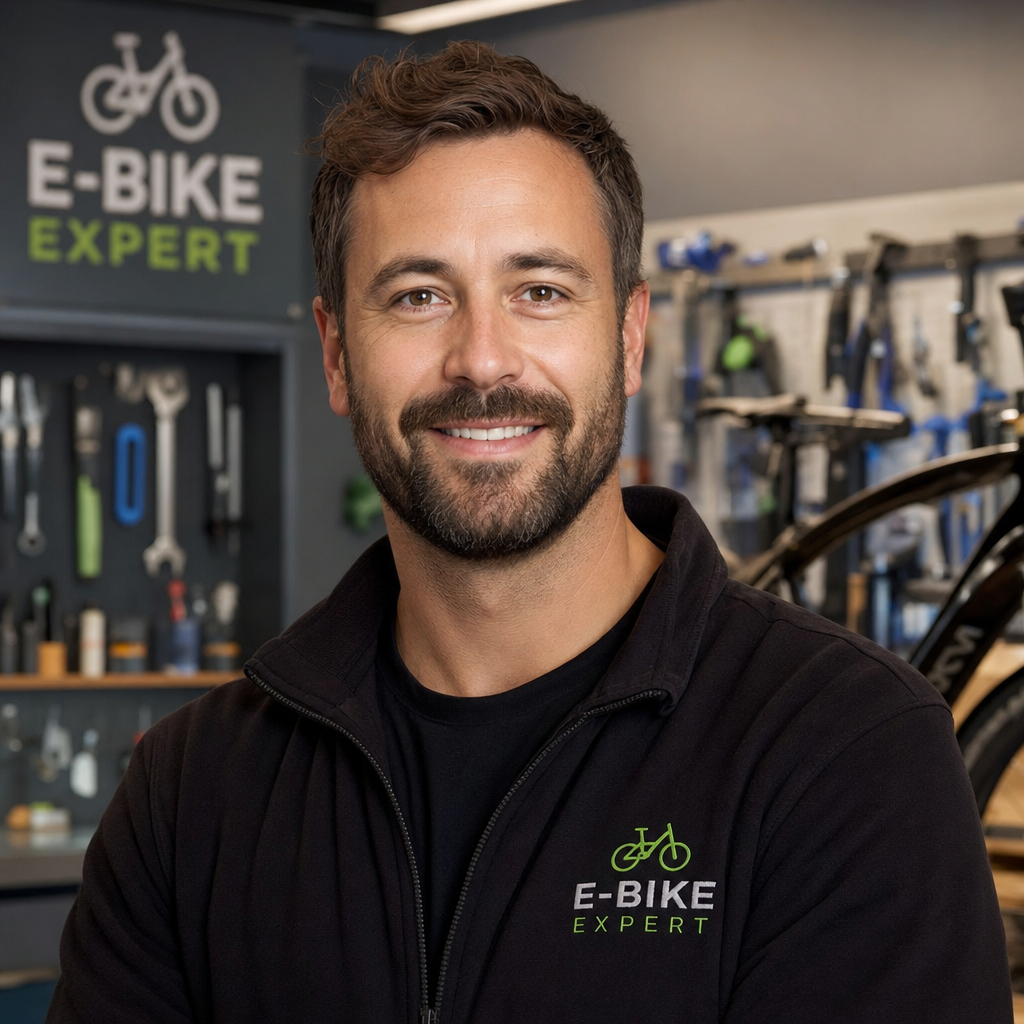
Ryan Williams has spent over 8 years testing, repairing, and writing about electric bikes. He has personally ridden and reviewed 150+ e-bike models from brands like Lectric, Aventon, Rad Power, Super73, and dozens more.
Before founding EBIKE Delight, Ryan worked as a bicycle mechanic for 5 years at independent bike shops across California, where he specialized in e-bike conversions and electrical system diagnostics. He holds a Certificate in Electric Vehicle Technology from the Light Electric Vehicle Association (LEVA).
Ryan’s work has been cited by Electric Bike Report, Electrek, and BikeRumor. When he is not testing the latest e-bike on California backroads, he is in his workshop tearing down batteries and controllers to understand what makes them tick — and what makes them fail.
Areas of Expertise
E-bike performance testing and real-world range verificationBattery diagnostics, charging best practices, and safetyBrand comparisons: Lectric, Aventon, Rad Power, Super73, and moreError code troubleshooting across major e-bike systemsE-bike laws, registration, and compliance by state
Ryan believes every rider deserves honest, hands-on information — not marketing hype.