E-Bike Battery Draining Too Fast: Causes, Diagnostics & How to Fix It
E-Bike Battery Draining Too Fast: Causes, Diagnostics & How to Fix It
If your e-bike battery is dying quicker than it used to, the most common cause is something you can fix in under a minute—low tire pressure. The other frequent culprits are cold weather, higher assist mode than you realize, brake drag, or an aging battery pack. Run through this checklist before you assume the battery needs replacement.
The Five-Check Diagnostic Checklist
These five checks cover 90 percent of range-loss issues and take about ten minutes total.
1. Tire pressure too low. Under-inflated tires create rolling resistance that forces the motor to work harder. Most e-bike tires need 30–50 psi (check the sidewall). A tire 10 psi low can reduce range by 10–15 percent. Use a gauge—squeezing the tire by hand is not accurate enough.
2. Assist mode set higher than needed. Riding in PAS 4 or 5 (or using the throttle heavily) pulls maximum current. If you normally ride in Eco and switched to Turbo without noticing, the battery drains roughly twice as fast. Check your display before every ride.
3. Brake drag. Lift the bike and spin each wheel. If the pads rub or the rotor drags, the motor fights that friction every rotation. Even minor drag wastes noticeable range over a long ride.
4. Cold weather. Lithium-ion batteries lose chemical reactivity below 50°F. At 32°F you can expect 20–30 percent less range. At 0°F, range can drop by half. If you rode in cold weather, the battery is fine—it just delivers less energy until it warms up.
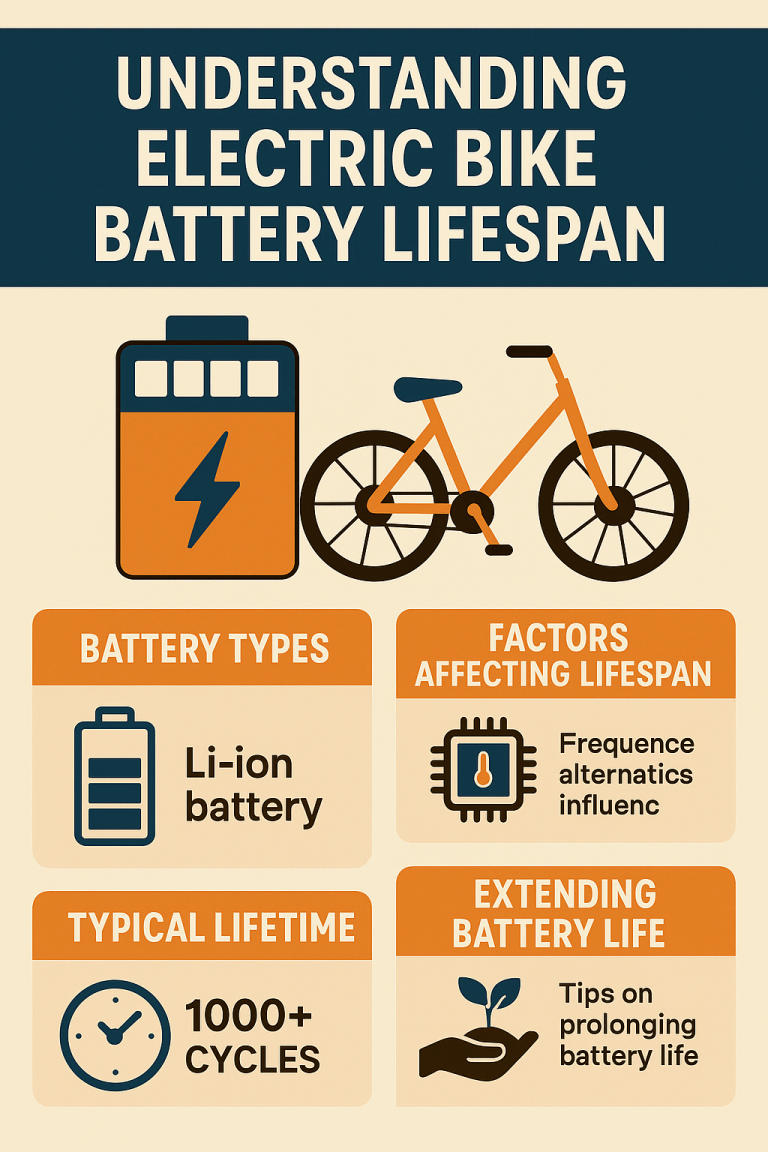
5. Battery age and cycle count. After 300–500 full charge cycles, most e-bike batteries retain about 70–80 percent of original capacity. A two-year-old commuter battery that gets ridden daily may have permanently lost 20–30 percent of its range.
Cause-by-Cause Fixes
Each cause below has a specific check and a practical fix. Work through them in order.
Low Tire Pressure
Every revolution of an under-inflated tire bends the sidewall more and creates a larger contact patch. The motor must push through that extra friction. On a typical commuter e-bike at 35 psi versus 22 psi, the difference can be 3–5 miles of lost range on a 20-mile trip.
Fix: Use a tire gauge to check against the psi range printed on the tire sidewall. Inflate to the top of the recommended range for paved riding. Check weekly—e-bike tires lose 1–2 psi per week naturally.
High Assist Mode or Heavy Throttle Use
The motor controller draws current proportional to the assist level. Level 1 might draw 100–150 watts on flat ground while Level 5 can draw 500–750 watts continuously. A throttle-only start pulls even more instant current. Riding the entire trip at max assist can cut range in half compared to Eco mode.
Fix: Drop to PAS 2 or 3 on flat ground. Use the throttle only for starts or steep sections. Every watt you add from pedaling is a watt the battery does not need to supply.
Brake Drag and Misaligned Calipers
Dragging brakes turn kinetic energy into heat constantly. On a bike with mechanical disc brakes, a bent rotor or misaligned caliper can waste 50–100 watts continuously—like riding with a partial brake pull the whole trip.
Fix: Lift the bike and spin each wheel. A good wheel should spin for several seconds and coast to a stop. Center the caliper by loosening its mounting bolts, squeezing the brake lever, and retightening. If the rotor is bent, use a rotor truing tool to gently straighten high spots. Spin again—it should now coast freely.
Cold Weather (Below 50°F)
Lithium-ion cells lose ion mobility as temperature drops. At 32°F the battery releases about 70–80 percent of its rated capacity. At 14°F it drops to roughly 50 percent. The battery is not damaged—it just cannot deliver full energy until it warms up.
Fix: Store the battery indoors above 60°F when not riding. If you must ride in cold weather, keep the battery mounted (the motor and controller generate some waste heat). Pre-warm the battery by bringing it inside for an hour before the ride. Reduce your range expectations accordingly.
Battery Age and Cycle Count
Lithium-ion cells degrade with every full charge-discharge cycle. After 300–500 cycles, most packs retain about 70–80 percent of original capacity. A daily commuter battery after three years is well into degradation territory.
Fix: Look up the battery’s rated cycle life in the manual. Count approximate cycles: if you ride 15 miles most days and full range is 30 miles, you drain about half the battery per ride—roughly 0.5 cycles per day. Over a year that is about 180 cycles. After three years that exceeds 500 cycles. If your battery is old and degraded, the only cure is replacement. In the meantime, use lower assist and keep tire pressure high to maximize what range remains.
Testing Battery Health with a Multimeter
A simple digital multimeter tells you whether the battery is holding the voltage it should. This works on any e-bike with a charge port that exposes positive and negative terminals.
What you need: A multimeter set to DC volts (200V range works for most e-bike batteries). The AstroAI Digital Multimeter is a reliable option with the DC voltage range needed for this check.
Step 1 — Predict the target voltage: Multiply the number of cells in series by 4.2V (full charge) and 3.0V (empty). A 48V nominal battery (13 cells in series) should read about 54.6V fully charged and about 39V empty. A 36V battery (10 cells in series) should read about 42V full and 30V empty. Check your manual for the exact nominal voltage if unsure.
Step 2 — Charge the battery fully: Let the charger run until the light turns green or the display shows 100 percent.
Step 3 — Measure at the charge port: Insert the multimeter probes into the positive and negative pins of the charging port (or directly on the battery terminals if accessible). Do not let the probes touch each other.
Step 4 — Read the voltage: A healthy battery reads within 0.5V of full spec. If it reads more than 1V below spec within 30 minutes of being unplugged, the cells have significant internal resistance or degradation.
Step 5 — Check for drop under load: Mount the battery on the bike. Set the multimeter to DC volts and connect the probes to the battery terminals (or use alligator clips). Turn the bike on and apply full throttle while the wheel is off the ground. If the voltage drops more than 3V instantaneously, the cells have high internal resistance. That battery will drain noticeably fast under real riding load.
How to Confirm the Fix Worked
After you make any adjustment—inflating tires, lowering assist, centering brakes, or warming the battery—verify the fix actually improved range.
The verification ride: Pick a flat, consistent route you can repeat exactly. A 5-mile loop on paved bike path is ideal. Note your starting battery percentage on the display. Ride the loop at the same assist level you normally use on that terrain. Record the ending percentage.
Do the same ride again after your fix. If the percentage lost on the second ride is at least 5 percent smaller over the same distance, the fix is working. If there is no change, move to the next cause on the list.
Battery or Motor: Finding the Real Problem
A worn-out motor can consume more power than normal, but it is far less common than battery degradation. Use these clues to separate the two.
Unusual noise or vibration: A grinding, clicking, or whining noise from the motor suggests bearing wear, magnet damage, or gear stripping. A damaged motor draws more current because it has to overcome internal friction. If the battery drains fast and you hear odd noises, the motor is likely the source.
Heat after short rides: Touch the motor casing after a 5–10 minute ride on flat ground. If it is too hot to hold (above 140°F), the motor is running inefficiently. A healthy hub motor on flat ground should be warm, not hot. Overheating motors waste energy as heat.
Voltage is normal, range is short: If the battery checks out at full voltage (54.6V for a 48V battery) but you still get only half the expected range, the problem could be the motor controller. A controller with a malfunctioning current sensor may deliver full power when it should limit output, effectively running the motor at max draw all the time.
The one test that settles it: Charge the battery fully, then ride a known flat 5-mile loop in the same assist level you used six months ago. Compare the voltage drop. If the drop is the same now as it was then, the battery is fine and the range loss is from something else (wind, payload, terrain). If the voltage drops faster than before, the battery is degrading.
How Cold Affects Range (and When to Worry)
Cold weather is the most common reversible cause of reduced range. Here is how it breaks down by temperature band.
| Temperature | Expected Range vs. 70°F | What happens inside the battery |
|---|---|---|
| 50°F | ~85–90% | Lithium-ion mobility decreases slightly |
| 32°F | ~70–80% | Electrolyte viscosity rises, internal resistance increases |
| 14°F | ~50–60% | Significant capacity reduction; avoid fast charging at this temp |
| 0°F and below | ~40–50% | Severe capacity loss; ride only if necessary |
When to worry: If your battery loses more than 30 percent range at temperatures above 50°F, the issue is not cold—it is one of the other causes on the checklist. Cold-related range loss should reverse fully when the battery warms up. If it does not, your battery has permanent degradation.
When to Replace the Battery
Replace the battery when you see any of these signs:
- Range has dropped below 60 percent of original on a flat route in mild weather at the same assist level you used when the battery was new.
- The battery voltage drops more than 4V instantly under throttle load (measured with a multimeter as described above).
- The battery casing is swollen, cracked, or deformed. A swollen lithium-ion pack is a fire risk—stop using it immediately and recycle it at a certified e-waste facility.
- The battery is more than four years old with regular use, even if it still holds some charge. Internal degradation accelerates after 500 cycles.
Frequently Asked Questions
Why does my e-bike battery drain faster on hills?
Climbing pulls more current because the motor has to overcome gravity. A 5 percent grade can double power consumption compared to flat ground. This is normal—use a lower assist level and shift to a lower gear to reduce the load on the motor.
Can I replace just the cells inside my e-bike battery?
Only if you have experience with lithium-ion battery assembly and spot welding. Most manufacturers seal the pack and do not sell individual cells. For safety reasons, replace the entire battery pack rather than attempting a DIY rebuild.
Does fast charging damage the battery and reduce range?
Fast charging generates more heat, which accelerates cell degradation over time. If your charger delivers more than 2 amps, use it only when you need a quick top-off. For daily charging, use the standard charger that came with the bike.
How long should an e-bike battery last before needing replacement?
Typically 3–5 years or 500–800 full charge cycles, whichever comes first. After that point, expect range to drop below 70 percent of original capacity regardless of how well you maintain it.

Ryan Williams has spent over 8 years testing, repairing, and writing about electric bikes. He has personally ridden and reviewed 150+ e-bike models from brands like Lectric, Aventon, Rad Power, Super73, and dozens more.
Before founding EBIKE Delight, Ryan worked as a bicycle mechanic for 5 years at independent bike shops across California, where he specialized in e-bike conversions and electrical system diagnostics. He holds a Certificate in Electric Vehicle Technology from the Light Electric Vehicle Association (LEVA).
Ryan’s work has been cited by Electric Bike Report, Electrek, and BikeRumor. When he is not testing the latest e-bike on California backroads, he is in his workshop tearing down batteries and controllers to understand what makes them tick — and what makes them fail.
Areas of Expertise
E-bike performance testing and real-world range verificationBattery diagnostics, charging best practices, and safetyBrand comparisons: Lectric, Aventon, Rad Power, Super73, and moreError code troubleshooting across major e-bike systemsE-bike laws, registration, and compliance by state
Ryan believes every rider deserves honest, hands-on information — not marketing hype.