Do Electric Bikes Move Themselves?
do electric bikes move themselves: Quick Answer
- Electric bikes do not move themselves without rider input, but they offer pedal-assist and throttle modes that significantly reduce the effort required.
- The motor engages when you pedal (pedal-assist) or when you twist a throttle, simulating a moped.
- Understanding these modes is crucial to operating an e-bike effectively and safely.
do electric bikes move themselves: Who This Is For
- Individuals new to electric bikes considering a purchase or first ride.
- Current e-bike owners seeking clarity on motor operation and features.
If you are comparing options here, GT POWER 3 Amps Smart AC Adapter Compatible with Schwinn Mendocino Bike is a relevant choice worth checking.

- 36V Lithium-ion Battery Electric Bike Smart Charger. Automatically stop charging when battery is fully charged. Power Adapter
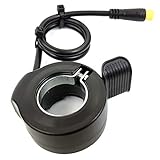
If you are comparing options here, Schuck E-Bike Thumb Throttle 130X,Waterproof Accelerator,22.2mm/0.87in Handlebars,Left/Right Universal Bicycle Conversion Replacement Parts is a relevant choice worth checking.
What to Check First
- Motor Type: Understand if your e-bike has a hub motor (front or rear wheel) or a mid-drive motor (located at the pedals). This affects how power is delivered.
- Assist Levels: Familiarize yourself with the different assist levels (e.g., Eco, Tour, Sport, Turbo) and how they modify motor output.
- Throttle vs. Pedal-Assist: Determine if your e-bike has a throttle, a twist grip or button that powers the motor without pedaling, or if it relies solely on pedal-assist.
- Battery Charge Indicator: Ensure the battery is adequately charged for your intended ride. A low battery will limit motor performance.
- Display Unit: Check the display for information on current assist level, speed, battery status, and any error codes.
Step-by-Step Plan: Understanding How Electric Bikes Move Themselves (With Rider Input)
1. Engage the Power System
Action: Turn on your e-bike’s battery and display unit.
Look for: The display screen illuminates, indicating the system is active.
Mistake: Forgetting to turn the bike on, leading to the assumption it won’t move.
2. Select Pedal-Assist Mode
Action: Choose your desired assist level using the controls on your handlebars.
Look for: The selected assist level displayed on the unit (e.g., “1” for Eco, “3” for Sport). Higher numbers generally mean more motor assistance.
Mistake: Riding on the highest assist level immediately, which can be jarring and drain the battery quickly.
3. Begin Pedaling
Action: Start pedaling as you normally would on a bicycle.
Look for: The motor to engage, providing a noticeable boost to your pedaling effort. You’ll feel less resistance and accelerate more easily.
Mistake: Expecting the bike to move without any pedaling in pedal-assist mode. The motor amplifies your effort, it doesn’t replace it entirely.
4. Utilize the Throttle (If Equipped)
Action: If your e-bike has a throttle, twist it or press the button while the bike is powered on.
Look for: The bike to accelerate or maintain speed without you needing to pedal.
Mistake: Engaging the throttle while stationary on a steep incline without applying brakes, which can cause the bike to roll backward.
5. Adjust Assist Levels on the Fly
Action: Increase or decrease the assist level as needed during your ride.
Look for: A change in the motor’s power output corresponding to your selection. Lower levels for flat terrain, higher for hills.
Mistake: Not adjusting assist levels, leading to excessive fatigue on inclines or unnecessary battery drain on flats.
6. Power Down the System
Action: Turn off the battery and display unit when finished riding.
Look for: The display screen to go dark.
Mistake: Leaving the system on, which can slowly drain the battery and potentially cause unintended activation if a component is bumped.
Common E-Bike Myths Debunked
- Myth: Electric bikes move themselves like scooters or motorcycles.
Correction: While some e-bikes have throttles that allow for motor-powered movement without pedaling, the primary design of most e-bikes is to assist your pedaling. They are still bicycles that require rider input to propel forward, just with significantly less effort. The motor is an augmentation, not a replacement for pedaling in most cases.
- Myth: You can ride an e-bike uphill with zero effort.
Correction: While e-bikes make climbing hills vastly easier, “zero effort” is an overstatement for most pedal-assist systems. You will still need to pedal, but the motor will provide substantial power to overcome gravity and resistance. Throttle-equipped bikes can offer near-effortless climbing, but even then, rider balance and steering are required.
Expert Tips for Operating Your E-Bike
- Tip: Always start in the lowest assist level when beginning a ride or encountering new terrain.
Action: Select “Eco” or “1” on your display.
Mistake to Avoid: Jumping straight to high assist levels, which can lead to wheel spin on loose surfaces or an overwhelming surge of power that compromises control.
- Tip: Understand the difference between hub motors and mid-drive motors for power delivery.
Action: Consult your e-bike’s manual or manufacturer’s website to identify your motor type.
Mistake to Avoid: Assuming all e-bike motors feel and perform identically. Hub motors often provide a push or pull sensation, while mid-drives feel more integrated with your pedaling.
- Tip: Practice using the throttle and brakes simultaneously in a safe, open area.
Action: Find a large, flat, empty parking lot. Gently apply throttle and then practice smooth braking.
Mistake to Avoid: First encountering the throttle’s power and the braking system’s response in a critical situation, like traffic or a downhill descent.
BLOCKQUOTE_0
FAQ
- Q: Can an electric bike move if I’m not pedaling?
A: Yes, if your e-bike is equipped with a throttle, you can twist or press it to engage the motor and move the bike without pedaling. Pedal-assist models require you to pedal for the motor to engage.
- Q: How much effort do I need to put in on an electric bike?
A: This depends on the assist level selected and whether you’re using a throttle. On pedal-assist, you’ll still pedal, but the motor significantly reduces the effort required. With a throttle, you can often achieve motion with minimal to no pedaling.
- Q: What happens if my e-bike’s battery dies?
A: If the battery dies, the electric motor will stop providing assistance. Your e-bike will then function like a regular, heavier bicycle. You can continue to pedal it, but it will require more effort than a standard bike due to the added weight of the motor and battery.
If you are comparing options here, GT POWER 3 Amps Smart AC Adapter Compatible with Nakto OX Folding 500W Electric.Bike is a relevant choice worth checking Check price the nakto folding electric bike review portable and budget friendly
If you are comparing options here, GT POWER 3 Amps Smart AC Adapter Compatible with Nakto OX Folding 500W Electric.Bike is a relevant choice worth checking.

- Lithium-ion Battery eBike Smart Charger. Automatically stop charging when battery is fully charged.
- Q: How do I know if my e-bike has a throttle?
A: Look for a twist grip on the handlebar (similar to a motorcycle or scooter) or a button or lever that you can press. Consult your e-bike’s manual if you are unsure.
Electric Bike Motor Operation Modes
| Mode | Description | Rider Input Required | Typical Use Case |
|---|---|---|---|
| <strong>Pedal-Assist</strong> | Motor engages and provides power proportional to pedaling effort. | Pedaling | General riding, hills, longer distances |
| <strong>Throttle</strong> | Motor engages and provides power without pedaling. | Throttle activation | Starting from a stop, short bursts of speed |
| <strong>Walk Assist</strong> | Motor provides low power output to help push the bike while walking. | Walking | Maneuvering the bike off-road or in tight spaces |
Common Mistakes When Operating an E-Bike
- Mistake: Expecting the e-bike to be self-propelled like a moped.
Why it matters: This misunderstanding can lead to frustration and improper operation. E-bikes are designed to augment, not replace, rider effort in most configurations.
Fix: Understand that pedal-assist requires pedaling, and throttle-only operation is a specific mode that may not be present on all e-bikes.
- Mistake: Not checking battery levels before a ride.
Why it matters: A low battery will severely limit or disable motor assistance, turning your e-bike into a heavy conventional bike.
Fix: Make it a habit to check the battery indicator on your display before every ride. Charge it fully if it’s low.
- Mistake: Using the highest assist level constantly.
Why it matters: This drains the battery rapidly and can lead to jerky acceleration, making it difficult to control the bike, especially in traffic or on technical terrain.
Fix: Select assist levels appropriate for the terrain and your energy levels. Start low and increase as needed.
- Mistake: Forgetting to turn off the e-bike system after a ride.
Why it matters: This can lead to a slow drain of the battery and, in rare cases, accidental engagement of the motor if components are bumped.
Fix: Develop a routine to power off the battery and display unit once you’ve finished riding.

Ryan Williams has spent over 8 years testing, repairing, and writing about electric bikes. He has personally ridden and reviewed 150+ e-bike models from brands like Lectric, Aventon, Rad Power, Super73, and dozens more.
Before founding EBIKE Delight, Ryan worked as a bicycle mechanic for 5 years at independent bike shops across California, where he specialized in e-bike conversions and electrical system diagnostics. He holds a Certificate in Electric Vehicle Technology from the Light Electric Vehicle Association (LEVA).
Ryan’s work has been cited by Electric Bike Report, Electrek, and BikeRumor. When he is not testing the latest e-bike on California backroads, he is in his workshop tearing down batteries and controllers to understand what makes them tick — and what makes them fail.
Areas of Expertise
E-bike performance testing and real-world range verificationBattery diagnostics, charging best practices, and safetyBrand comparisons: Lectric, Aventon, Rad Power, Super73, and moreError code troubleshooting across major e-bike systemsE-bike laws, registration, and compliance by state
Ryan believes every rider deserves honest, hands-on information — not marketing hype.
Last update on 2026-06-23 / Affiliate links / Images from Amazon Product Advertising API