Adding A Motor To Your Adult Tricycle: Options And Installation
Transforming your adult tricycle with an electric motor can significantly enhance its utility, making hills feel flatter and extending your travel distance. Whether your goal is to reduce physical strain, increase your commuting range, or simply enjoy a more effortless ride, a motor kit presents a compelling upgrade. However, the market offers a diverse array of options, and selecting the right one requires careful consideration. This guide aims to demystify the choices, illuminate the trade-offs, and equip you to make an informed decision for your adult tricycle motor conversion.
Understanding Your Motor for Adult Tricycle Options
When embarking on the journey to motorize an adult tricycle, the two primary drivetrain configurations to consider are hub motors and mid-drive motors. Each system presents a unique profile in terms of installation intricacy, performance characteristics, and the overall sensation of the ride.
- Hub Motors: These motors are integrated directly into the hub of a wheel, making them the most prevalent type. Their installation is generally more straightforward, often arriving as a pre-assembled wheel ready for replacement. Front hub motors are typically easier to fit but can subtly influence steering dynamics, whereas rear hub motors contribute to better weight distribution and improved traction.
- Pros: Simpler installation process, generally more economical, minimal disruption to the existing drivetrain.
- Cons: Can create an unbalanced wheel weight distribution, may offer less torque on steeper inclines compared to mid-drives, can complicate tire changes.
- Mid-Drive Motors: These motors are mounted at the tricycle’s bottom bracket and drive the crankset. By leveraging the tricycle’s existing gear system, they provide exceptional torque for tackling inclines and a riding experience that feels more natural and integrated.
- Pros: Superior performance on hills, balanced weight distribution, efficient use of the tricycle’s gears, often feel more organically part of the bike.
- Cons: More complex installation, can place increased stress on the drivetrain components, typically command a higher price point.
Essential Components of a Motor for Adult Tricycle Kit
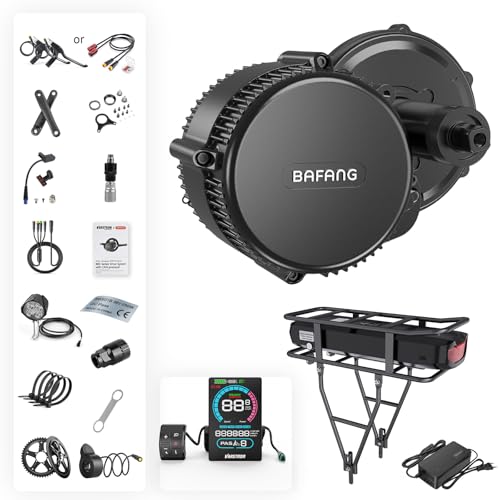
Beyond the motor unit itself, a comprehensive kit typically comprises several key elements:
- Battery: The energy reservoir, quantified by its capacity in Watt-hours (Wh). A higher Wh rating generally translates to a greater travel range. Lithium-ion batteries are the industry standard due to their high energy density and extended lifespan.
- Controller: This acts as the system’s central processing unit, regulating the flow of power from the battery to the motor in response to user input, whether via a throttle or a pedal-assist sensor.
- Throttle/Pedal Assist Sensor (PAS): These are the user interface components. A throttle allows for on-demand power delivery, while a PAS detects pedaling motion and supplements it with motor assistance. Many kits offer the flexibility of both.
- Display: This unit provides crucial ride information, such as current speed, remaining battery level, the selected assist level, and other pertinent data.
Comparing Motor for Adult Tricycle Kits: A Detailed Look
Selecting the optimal motor for your adult tricycle necessitates a careful evaluation of multiple performance and practical factors. The following comparison table aims to clarify the key distinctions between common options.
| Feature | Hub Motor Kit (Rear) | Mid-Drive Motor Kit |
|---|---|---|
| Installation | Moderate (Wheel replacement) | Complex (Bottom bracket modification) |
| Hill Climbing | Good | Excellent |
| Ride Feel | Can feel like push from behind | More natural, integrated |
| Drivetrain Load | Minimal | Moderate (uses existing gears) |
| Typical Cost | $300 – $700 | $500 – $1200+ |
| Weight Balance | Rear-biased | Centralized |
The “Underpowered” Illusion: A Common Failure Mode
A frequent misstep for individuals undertaking their first motor conversion is selecting a kit that lacks sufficient power for their intended use. This often materializes as a motor that struggles noticeably on inclines or feels disappointingly sluggish even when set to higher assist levels. The outcome is a perceived lack of power, despite having invested in a motor.
Early Detection Strategy: Before committing to a purchase, meticulously examine the motor’s wattage and torque specifications. For adult tricycles, particularly if you anticipate encountering hills or frequently carrying loads, it is advisable to target a motor with a minimum of 500W and a torque rating of 50 Nm or higher. Be wary of product descriptions that are vague or only specify voltage without providing wattage or torque figures; these are potential indicators of inadequate performance. Furthermore, a scarcity of user reviews that specifically address performance on inclines should serve as a cautionary signal. If a kit’s marketing emphasizes a “smooth ride” but omits details regarding its power output on challenging terrain, consider it a red flag.
Segment Fit: Which Motor is Right for Your Ride?
The most suitable motor for your adult tricycle is intrinsically linked to how and where you intend to utilize it.
- For Casual Cruising and Flat Terrain: A front hub motor or a lower-wattage rear hub motor (250W-350W) often proves adequate. These options are generally the most budget-friendly and are simplest to install, providing a gentle assist for leisurely neighborhood rides or to counteract mild headwinds.
- Example: A 250W rear hub motor kit from a reputable manufacturer like Bafang or Tongsheng, coupled with a 36V, 10Ah battery, can deliver a discernible assist for relaxed excursions around the park or local routes.
- For Moderate Hills and Longer Commutes: A rear hub motor with a higher wattage (500W-750W) or a mid-drive motor is recommended. These configurations offer enhanced torque and power, enabling more effective negotiation of inclines and sustained speed over extended distances.
- Example: A 750W Bafang BBS02B mid-drive motor kit paired with a 48V, 15Ah battery provides substantial power for hill climbing and a more natural pedaling sensation, making it ideal for commuting or recreational rides with varied topography.
- For Steep Hills, Heavy Loads, or Frequent Off-Road Use: A robust mid-drive motor (750W+) stands out as the superior choice. Its capacity to utilize the tricycle’s existing gearing makes it exceptionally efficient at generating the torque required for steep ascents and for transporting substantial weight.
- Example: A 1000W Tongsheng TSDZ2 mid-drive motor kit, equipped with a high-capacity battery (e.g., 52V, 20Ah), is engineered for maximum torque and sustained power output, rendering it highly suitable for challenging inclines and cargo hauling applications.
Installation Considerations and Best Practices
The installation of a motor kit demands a certain level of mechanical proficiency. While many kits are designed with DIY installation in mind, understanding the process and potential hurdles is paramount.
DIY Installation Checklist
Before commencing the installation, or even before purchasing a kit, review this checklist to ensure you are adequately prepared:
- [ ] Tricycle Frame Compatibility: Does the kit explicitly state compatibility with your tricycle’s specific frame type (e.g., step-through, delta configuration)?
- [ ] Wheel Size: Is the motor wheel (for hub motor kits) the same diameter as your tricycle’s existing wheels?
- [ ] Brake Compatibility: Will the motor unit (particularly hub motors) obstruct or interfere with your current braking system (disc, V-brake, drum)?
- [ ] Bottom Bracket Type (for Mid-Drives): Is your tricycle’s bottom bracket a standard type (e.g., BSA threaded) and compatible with the selected mid-drive motor?
- [ ] Battery Mounting Space: Is there sufficient and secure space on your tricycle frame to accommodate the battery pack?
- [ ] Wiring Management: Have you devised a plan for neatly and securely routing all motor and sensor wires to prevent snagging or damage during operation?
- [ ] Tools: Do you possess the necessary tools for the installation (e.g., crank puller, bottom bracket tool, torque wrench, wire cutters/strippers)?
Information Gain: Understanding Battery Voltage vs. Wattage
A common point of confusion for consumers is the distinction between battery voltage and motor wattage. While voltage (e.g., 36V, 48V, 52V) signifies the electrical potential, wattage (calculated as Volts x Amps) quantifies the motor’s power output. A higher voltage battery can empower a motor to deliver greater power, but the motor’s fundamental design and the controller’s programming ultimately dictate its performance capabilities. For instance, a 500W motor operating on a 48V system will generally exhibit superior performance compared to the same 500W motor on a 36V system, particularly when under load. Always prioritize examining the motor’s wattage and torque ratings for a clearer indication of its potential.
Frequently Asked Questions
Q1: Will adding a motor kit invalidate my tricycle’s warranty?
A1: In most instances, yes. The integration of a third-party kit typically voids any manufacturer’s warranty on the original tricycle. It is advisable to weigh the value of the existing warranty against the benefits that motorization will provide.
Q2: What are the legal considerations when motorizing an adult tricycle?
A2: Regulations concerning electric bicycles and tricycles vary significantly by jurisdiction. Many areas classify e-trikes with motors up to a specified wattage (e.g., 750W) and speed limit (e.g., 20 mph) as electric bicycles, permitting their use on designated bike paths. It is imperative to consult your local laws regarding power limits, speed restrictions, and mandatory helmet usage for motorized bicycles.
Q3: How much range can I realistically expect from a motor kit?
A3: The achievable range is highly variable and is influenced by several factors, including battery capacity (Wh), motor efficiency, rider weight, terrain type, the selected assist level, and the amount of pedaling effort exerted. A typical 10Ah battery on a 36V system (360Wh) might provide between 20-40 miles of range, whereas a larger 20Ah battery on a 52V system (1040Wh) could potentially extend this to 50-80+ miles under optimal conditions.

Ryan Williams has spent over 8 years testing, repairing, and writing about electric bikes. He has personally ridden and reviewed 150+ e-bike models from brands like Lectric, Aventon, Rad Power, Super73, and dozens more.
Before founding EBIKE Delight, Ryan worked as a bicycle mechanic for 5 years at independent bike shops across California, where he specialized in e-bike conversions and electrical system diagnostics. He holds a Certificate in Electric Vehicle Technology from the Light Electric Vehicle Association (LEVA).
Ryan’s work has been cited by Electric Bike Report, Electrek, and BikeRumor. When he is not testing the latest e-bike on California backroads, he is in his workshop tearing down batteries and controllers to understand what makes them tick — and what makes them fail.
Areas of Expertise
E-bike performance testing and real-world range verificationBattery diagnostics, charging best practices, and safetyBrand comparisons: Lectric, Aventon, Rad Power, Super73, and moreError code troubleshooting across major e-bike systemsE-bike laws, registration, and compliance by state
Ryan believes every rider deserves honest, hands-on information — not marketing hype.