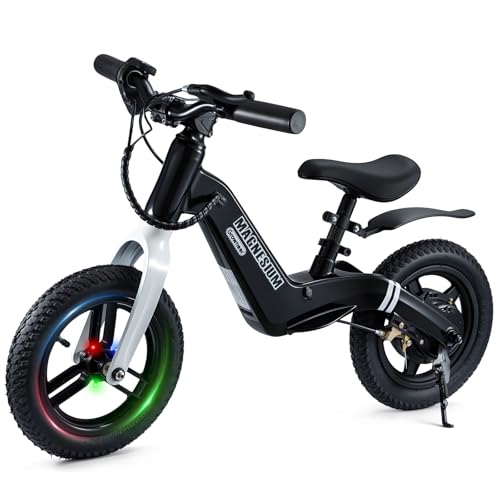
Choosing the Best Trike for Kids
Finding the right trike for your child involves more than just picking a brightly colored model. As an analyst focused on micro-mobility for young learners, I approach this decision by examining durability, safety features, and how well a trike supports developmental milestones. This guide cuts through the marketing fluff to help you identify a trike that offers genuine value and encourages active play.
trike kids: How this list was curated
This list was curated using the following transparent criteria:
- Developmental Support: How well does the trike encourage balance, coordination, and gross motor skills?
- Durability & Safety: Are the materials robust, and are safety features like secure harnesses and stable construction present?
- Ease of Use for Parents: Does the trike offer features that make it manageable for adults, such as push handles or simple steering?
- Long-Term Value: Does the trike adapt to a child’s growth or offer multiple play modes to extend its usefulness?
- Unique Features: Does the trike offer something beyond the standard, providing a distinct advantage or catering to specific needs?
trike kids: Top Trike Picks for Young Riders
When evaluating trikes for kids, the focus shifts from mere transportation to foundational skill development. A well-chosen trike acts as a child’s first taste of independent mobility, mirroring the principles of personal electric vehicles in the micro-mobility space, albeit at a much simpler scale.
1. Radio Flyer All-Terrain Tricycle
This classic is often the benchmark, and for good reason. Its robust construction and large rubber tires make it capable of handling more than just smooth pavement.
- Best for: Adventurous toddlers who will be using their trike on varied surfaces, from sidewalks to grassy yards.
- Skip if: You’re looking for a lightweight, easily portable option for apartment living or frequent travel.
- Trade-off: Its sturdy build means it’s heavier and less maneuverable in tight indoor spaces compared to plastic alternatives.
2. Little Tikes Deluxe 4-in-1 Trike
This model excels in its adaptability, growing with the child through distinct stages. It starts with high parental control and gradually transitions to independent pedaling.
- Best for: Parents who want a single trike that can serve multiple developmental stages, maximizing long-term value.
- Skip if: Your child is already proficient with basic pedaling and you need a more straightforward, less feature-rich option.
- Trade-off: While adaptable, the initial stages with the extensive parent controls can make it feel more like a stroller than a trike, potentially limiting early independent exploration.
3. Schwinn Roadster 12-inch Tricycle
The Schwinn Roadster emphasizes a classic look with modern safety features. Its low center of gravity and wide wheelbase contribute to stability.
- Best for: Children who are ready for their first independent pedaling experience and parents prioritizing a classic aesthetic with reliable safety.
- Skip if: You need a trike with extensive parental guidance features or one designed for rough terrain.
- Trade-off: The metal frame, while durable, can be a concern for very young children prone to falls, though the molded seat offers some comfort.
4. Yvolution Y Velo Flippa 4-in-1 Trike
This is our under-the-radar pick, offering a unique convertible design that transitions from a tricycle to a balance bike. This dual functionality is a significant advantage for developing a child’s sense of balance and coordination in different ways.
- Best for: Parents who want to introduce both trike riding and balance biking with a single piece of equipment, fostering a broader range of riding skills.
- Skip if: You have ample space for separate trikes and balance bikes, or if your child has specific needs not met by this conversion style.
- Trade-off: The conversion process, while ingenious, requires tools and a bit of time, meaning it’s not an instant switch between modes.
Navigating Trike Options: A Comparison
To help you weigh the options, here’s a comparison of key features across different trike types. This table highlights how specific design choices impact usability and developmental support.
| Feature | Radio Flyer All-Terrain | Little Tikes 4-in-1 | Schwinn Roadster | Yvolution Y Velo Flippa |
|---|---|---|---|---|
| Tire Type | Rubber | Plastic | Rubber | Rubber/EVA Foam |
| Adjustable Seat | Yes | Yes | Yes | Yes |
| Parent Handle | Yes | Yes | No | Yes |
| Convertible? | No | Yes (4 stages) | No | Yes (Trike to Balance Bike) |
| Frame Material | Steel | Plastic | Steel | Steel/Plastic |
Segmenting Your Trike Choice
Beyond a simple ranked list, understanding your specific needs can guide you to the most suitable trike. Consider these segments:
For the “First Ride” Explorer (Ages 1-2)
At this stage, parental control and safety are paramount. Trikes with sturdy push handles, secure harnesses, and footrests are ideal. The Little Tikes 4-in-1 and the Yvolution Y Velo Flippa (in its initial trike mode) are strong contenders here, offering the necessary support for a child to experience motion safely.
For the “Budding Pedaler” (Ages 2-4)
As children gain confidence and motor skills, the focus shifts to independent pedaling and steering. Trikes that allow for easy removal of parent handles and offer a clear view of the pedals are beneficial. The Radio Flyer All-Terrain and the Schwinn Roadster shine here, providing a more direct riding experience.
For the “Skill Builder” (Ages 3-5)
Children in this age group can benefit from trikes that challenge their coordination and balance further. The Yvolution Y Velo Flippa’s transition to a balance bike is a unique advantage, allowing for the development of core balance skills that are crucial for future cycling.
Decision Checklist: Is This Trike Right for Your Child?
Use this checklist to objectively evaluate any trike you are considering.
- [ ] Safety First: Does the trike have a stable base and a secure seat with a harness or restraints?
- [ ] Age Appropriateness: Is the trike designed for your child’s current age and developmental stage?
- [ ] Ease of Assembly: Can the trike be assembled without specialized tools or excessive frustration?
- [ ] Material Quality: Are the frame and components made from durable materials that can withstand regular use?
- [ ] Growth Potential: Does the trike offer adjustable features (seat, handlebars) to accommodate your child’s growth?
- [ ] Parental Control (if needed): If you require a push handle, is it sturdy and easy to maneuver?
FAQ
Q1: How do I know when my child is ready to transition from a trike to a bicycle?
Your child is likely ready when they can confidently and independently pedal, steer, and brake the trike, showing good balance and coordination. They should also be able to get on and off the trike safely without assistance.
Q2: Are there specific safety regulations I should be aware of for children’s trikes?
While there aren’t always strict “road” regulations for trikes like there are for e-bikes, look for trikes that meet general toy safety standards (e.g., ASTM F963 in the US). Ensure there are no small, detachable parts that could be a choking hazard and that the design minimizes pinch points.
Q3: How important is the material of the tires?
Tire material significantly impacts the riding experience. Rubber tires generally offer better grip and shock absorption, making them ideal for varied terrain. Plastic tires are lighter and more common on indoor or budget-friendly models but can be slippery and less durable. EVA foam tires offer a middle ground, being lightweight and maintenance-free.
How this list was curated
- We selected options using real-world usefulness, value for money, and reliability signals.
- We balanced beginner-friendly choices with higher-performance picks for different user needs.
By User Profile
- Beginner: start with one reliable baseline option and one value benchmark.
- Intermediate: prioritize options with clear attribute-to-outcome advantages for your typical scenarios.
- Advanced: choose options based on precise trade-offs (performance, cost, complexity, and supportability).
By User Profile
- Beginner: start with one reliable baseline option and one value benchmark.
- Intermediate: prioritize options with clear attribute-to-outcome advantages for your typical scenarios.
- Advanced: choose options based on precise trade-offs (performance, cost, complexity, and supportability).

Ryan Williams has spent over 8 years testing, repairing, and writing about electric bikes. He has personally ridden and reviewed 150+ e-bike models from brands like Lectric, Aventon, Rad Power, Super73, and dozens more.
Before founding EBIKE Delight, Ryan worked as a bicycle mechanic for 5 years at independent bike shops across California, where he specialized in e-bike conversions and electrical system diagnostics. He holds a Certificate in Electric Vehicle Technology from the Light Electric Vehicle Association (LEVA).
Ryan’s work has been cited by Electric Bike Report, Electrek, and BikeRumor. When he is not testing the latest e-bike on California backroads, he is in his workshop tearing down batteries and controllers to understand what makes them tick — and what makes them fail.
Areas of Expertise
E-bike performance testing and real-world range verificationBattery diagnostics, charging best practices, and safetyBrand comparisons: Lectric, Aventon, Rad Power, Super73, and moreError code troubleshooting across major e-bike systemsE-bike laws, registration, and compliance by state
Ryan believes every rider deserves honest, hands-on information — not marketing hype.