Can Medicare Coverage Help You Get an Electric Bike
Medicare Coverage does not extend to electric bikes if you need help moving. If you ask, “Will Medicare pay for an electric bike?” the answer is no. You might feel upset if you need help to get around, but you are not alone. Many people use mobility devices. Look at the chart below. It shows how many Medicare users need these devices.
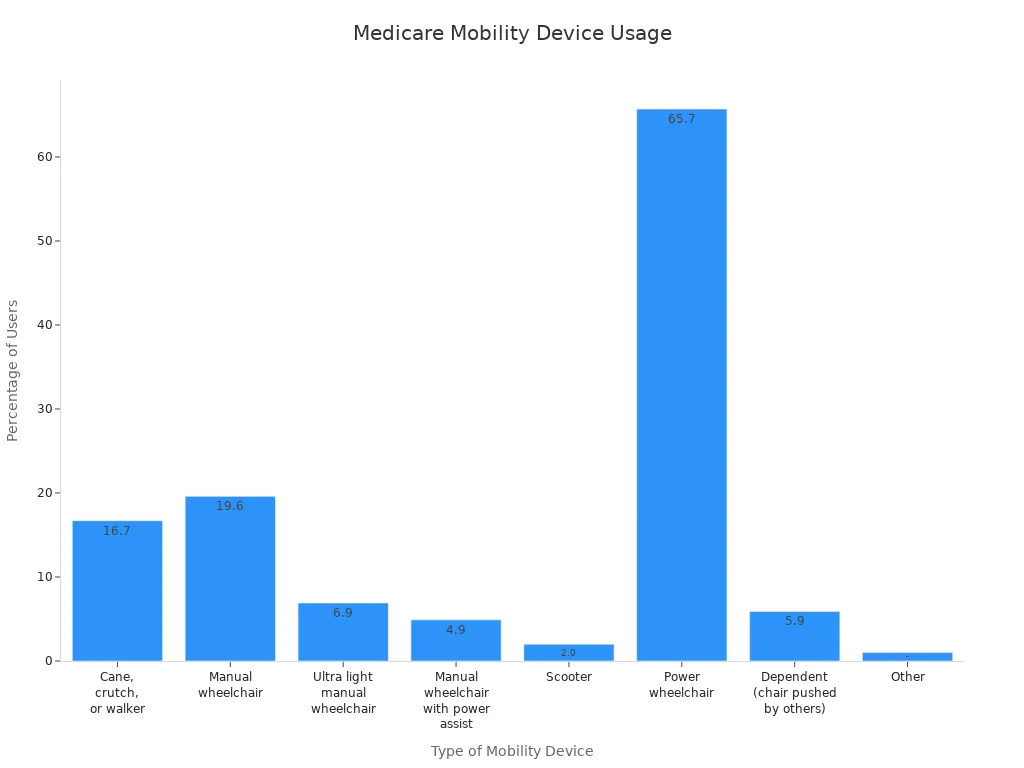
However, Medicare Coverage does include other ways to help you move, so you still have some choices.
Key Takeaways
- Medicare does not pay for electric bikes. Electric bikes do not count as durable medical equipment.
- Medicare pays for things like manual wheelchairs, power wheelchairs, and scooters. These are covered if you need them for health reasons.
- You need a doctor’s note to get coverage. You also need to show you have trouble moving at home.
- Some Medicare Advantage plans give wellness money. This money may help you buy fitness gear, like e-bikes.
- Local and state programs may give grants or rebates for electric bikes. These programs often help people with low incomes.
- You can use Health Savings Accounts and Flexible Spending Accounts to buy an electric bike. Your doctor must say you need it.
- Advocacy matters. Tell your story to help get better coverage for electric bikes.
- Look into private insurance. Some plans may pay for electric bikes if you need them for health reasons.
Medicare Coverage for Mobility Devices
What Medicare Covers
You might want to know what mobility devices medicare helps pay for. Medicare helps with things that make it easier to move at home. Here are some common choices:
- Manual wheelchairs
- Power mobility devices
- Scooters
Medicare puts these devices in a group called durable medical equipment, or dme. These items must follow certain rules. They need to last at least three years. They must be used for medical reasons. They should help you at home. You can only use them if you have an illness or injury.
Here is a quick chart about what makes something durable medical equipment:
| Criteria | Description |
|---|---|
| Can withstand repeated use | The equipment must be strong enough to use many times. |
| Expected life of at least 3 years | The equipment should last at least three years. |
| Primarily used for medical purposes | The equipment must be for a medical reason. |
| Not useful without illness/injury | It should only help people who are sick or hurt. |
| Appropriate for home use | The equipment is meant to be used at home. |
Medicare pays for 80% of the approved price for these devices. You pay the rest. For example, if a scooter costs $2,000 but medicare says $1,500 is approved, you pay $300 plus any extra if the supplier does not take medicare.
Electric Bike and Medicare
You may wonder if medicare covers an electric bike or e-bike. The answer is no. Medicare does not count an e-bike as durable medical equipment. E-bikes do not fit the dme rules. They are not just for people with medical needs. People use e-bikes for fun or exercise, not just for moving at home because of sickness or injury.
Medicare has strict rules for what it covers. To get a power wheelchair or scooter, you need:
- A face-to-face visit with your doctor
- A prescription that says you need the device for health reasons
- Proof that you have trouble moving at home, even with a walker or cane
- Trouble with daily things like bathing or dressing
- The ability to use the device safely
Medicare does not pay for e-bikes unless you have a special medical need. Even then, you need lots of paperwork and approval. Most people do not get help from medicare for an electric bike.
Covered Alternatives
If you need help moving, medicare gives you other choices. You can look at power wheelchairs and mobility scooters. These devices help you move around your home and do daily things. You must meet certain rules to get them.
Here is a table that shows what you need for coverage:
| Eligibility Criteria | Description |
|---|---|
| Doctor’s Prescription | You need a prescription from a doctor after a face-to-face visit. |
| Medical Necessity | Your health must make it hard to move at home. |
| Activities of Daily Living | You must have trouble with daily things like bathing and dressing. |
| Inability to Use Manual Equipment | You must not be able to use a manual wheelchair or scooter but can use a power device safely. |
| Specific Medical Condition | The wheelchair must help with a certain medical problem or injury and be used at home. |
| Face-to-Face Meeting | You must see your doctor no more than 45 days before getting the prescription. |
If you qualify, medicare pays most of the cost for these devices. You pay the rest. E-bikes are not covered, but you still have ways to stay mobile.
Why Medicare Does Not Cover Electric Bikes
Medicare Criteria
You may wonder why Medicare does not pay for electric bikes. The reason is because Medicare has strict rules. These rules are about medical needs, not fun or convenience. Medicare only pays for things that help with health problems. Look at this table to see how Medicare picks what counts as durable medical equipment:
| Criteria | Description |
|---|---|
| Medical Necessity | Equipment must be needed for medical treatment. |
| Repeated Use | Equipment should be used many times for health reasons. |
| Medical Purpose | Equipment must help with health, not just for fun. |
| Classification | E-bikes are called recreational vehicles, not important medical tools. |
Medicare does not pay for e-bikes because they are for fun or travel. You might use an e-bike to get around or exercise. But Medicare only pays for things that help you with health at home.
Medical Necessity
Medicare checks if you really need a device for health before it pays. You need a doctor’s note that says the device helps you at home. If you have trouble moving from room to room, Medicare may pay for a wheelchair or scooter. The device must be needed for your health and daily life. An e-bike does not fit this rule. You may want an e-bike to travel or get fit, but Medicare sees it as a choice, not a need.
Tip: If your doctor says you need help moving at home, ask about power wheelchairs or scooters. These devices follow Medicare’s rules for medical necessity.
Common Misunderstandings
Many people think Medicare pays for any device that helps them move. This is not true. Here are some things people get wrong:
- Medicare has strict rules for “medical necessity.” It only pays for devices that help with basic needs, like using the bathroom or moving at home.
- E-bikes are seen as things that make life easier, not as important mobility devices. Medicare does not pay for them because they do not meet the medical necessity rule.
- Safety is important. E-bikes do not have the safety features found in wheelchairs or scooters. Medicare wants you to use safe devices at home.
You may feel sad if you hoped to get an electric bike from Medicare. You are not alone. Many people have questions about what is covered. If you need help, talk to your doctor or Medicare provider. They can help you find the right device for your needs.
Exceptions and Medicare Advantage Plans
Wellness Allowances
You might feel sad when you find out medicare does not pay for an e-bike. There is some good news. Some Medicare Advantage plans give you wellness allowances. These allowances help you buy fitness equipment. Sometimes, you can use this money for gym memberships or exercise classes. You might even use it for an e-bike. Not every plan lets you do this, so check your plan’s rules. If you want to use a wellness allowance for an e-bike, ask your plan provider. They can tell you if an e-bike counts as approved fitness equipment.
Tip: Always call your Medicare Advantage plan before you buy anything. Ask if your wellness allowance pays for e-bikes or other fitness gear.
Special Circumstances
Most of the time, medicare does not pay for an e-bike, even if you need help moving. Sometimes, you can find rare exceptions with other programs. Some adaptive e-bikes get financial help from disability programs or transportation groups. Local public health groups may also help. These programs look at your needs. They may give support if you have trouble walking or getting around.
Here are some places where you might get help:
- Disability programs sometimes pay for adaptive e-bikes.
- Transportation programs may help if you need an e-bike for work or school.
- Local public health programs offer support for people with mobility needs.
If you think you qualify, talk to your doctor or local health office. They can help you find the right program.
State or Local Programs
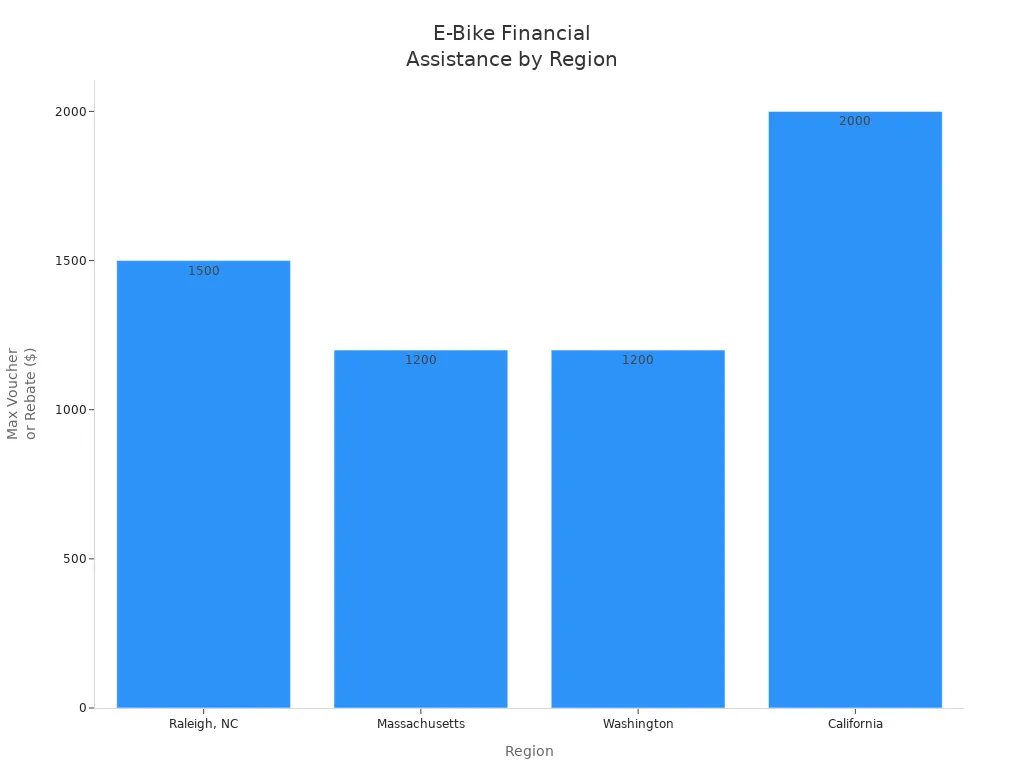
You can get more help from state or local programs. Many places give rebates or vouchers for e-bikes. This is helpful if you have a low income or need help moving. These programs are different in each area, so check what is near you.
Here is a table showing some examples:
| Region | Voucher/Rebate Amount | Income-Based Adjustment | Additional Support |
|---|---|---|---|
| Raleigh, NC | $500 standard; $1,500 for low-income applicants | Yes | None |
| Massachusetts | Up to $1,200 | Yes | Sometimes includes safety gear |
| Washington | $300–$1,200 | Yes | Must use within 45 days |
| California | Up to $2,000 | Yes | Includes bike accessories |
You can also find programs in other states:
- Oregon gives up to $250 for a new e-bike, with $750 for low-income buyers.
- Portland gives a subsidy for people who ride an e-bike to work every day.
- Illinois has a plan to give back 25% of the price, up to $500, with the Illinois Electric Bicycle Rebate Act.
- Chicago pays up to $300 for e-bike purchases, helping people in need.
- Minnesota gives a rebate of up to $500 for e-bikes with the Minnesota E-Bike Rebate Program.
If you want to apply, visit your state’s website or local transportation office. You may need to show proof of income or a doctor’s note. These programs can help you get moving, even if medicare does not pay for an e-bike.
Alternatives to Electric Bikes Through Medicare
Power Wheelchairs
If you have trouble moving at home, you can try power wheelchairs. These chairs help when walking is too hard. Your doctor will check if you need one for health reasons. Medicare usually pays most of the price if you qualify. Power wheelchairs are good for use inside and sometimes outside on smooth ground. You move them with a joystick, so you do not need strong arms. Many people use power wheelchairs for things like getting dressed or cooking.
Note: You must show you cannot use a manual wheelchair safely before medicare will pay for a power wheelchair.
Mobility Scooters
Mobility scooters are another way to stay active. These scooters help you move inside and outside. You steer them with handlebars, like riding a bike or e-bike. Medicare pays for scooters if you cannot walk far but can sit up and use your hands. Scooters come in many sizes, so you can pick what works for you. Many people say scooters help them visit friends or go shopping.
Here are some things people like about mobility scooters:
- Simple to drive and park
- Good for going outside
- Can carry bags or groceries
Comparing Options
You may wonder which device is best for you. Both power wheelchairs and scooters help you move, but they are different. Power wheelchairs are better for indoors and for people who need more help. Scooters are great for outside and for people who want more freedom.
Let’s see how people feel about these devices:
| Device Type | Satisfaction Rate | Best For |
|---|---|---|
| Mobility Scooter | 84.6% | Outdoor trips, errands |
| Power Wheelchair | 72% (approx.) | Indoor use, daily tasks |
- Almost half of people feel happy with their device, and about a quarter feel very happy.
- People using scooters are the most satisfied.
- Some people need to change or add things to feel comfortable.
- Many people say getting a device from medicare is hard. About 70% think the process is tough, which can make people upset or cause health issues.
Tip: If you want to move better, talk to your doctor about what device is right for you. You may not get an e-bike from medicare, but you still have good ways to stay active.
Electric Bike Funding Options
Private Insurance
You might feel stuck if medicare will not pay for an e-bike. But you still have choices. Some private insurance companies cover electric bikes. These plans help if your bike is stolen or damaged. They also help if you have an accident. Some plans pay if you hurt someone or break something while riding.
Here are some companies you can look at:
- Markel Insurance: You can pick what you want covered. It protects against theft, damage, and accidents. It also covers you if you hurt someone. You get coverage in other countries too.
- Progressive: This company covers theft, damage, and bike parts. You can get this protection anywhere in the United States.
- Velosurance: This company only covers bikes. It pays for theft, damage, and even racing accidents.
- State Farm: You can add bike insurance to your other plans. It covers theft, damage, and if you hurt someone.
- Sundays Insurance: This plan covers theft, damage, and if you hurt someone else. It also pays if you need to rent a bike.
- Spoke Insurance: This company uses technology to make plans just for you. You can get quick coverage and file claims on your phone.
Tip: Always read your insurance plan before you buy it. Ask questions so you know what is covered and what is not.
HSAs and FSAs
You might have a health savings account or flexible spending account. These accounts help you pay for health costs with money before taxes. If your doctor says you need an electric bike for your health, you can use these accounts to buy one. You need a note from your doctor that says why you need the bike.
About 20% of people in the U.S. have an HSA or FSA. If you do, you can use it for things that help your health. This makes it easier to buy equipment that keeps you active. Always save your doctor’s note and your receipts. You may need to show them if your account asks for proof.
Note: Medicare does not let you use its money for an e-bike. But you can use an HSA or FSA if you meet the health rule.
Grants and Community Help
You can get help from grants and local programs. These programs help people with disabilities who need special equipment. Some give loans or even free electric bikes.
Here are some programs you can check out:
- E-Bike Lending Library and Ownership Grant Program: Groups can get money to start e-bike loan programs. This helps more people try and use electric bikes.
- Team Semper Fi Peter Murphy Sports Program: Gives special equipment and help to veterans.
- High Fives Foundation: Gives money to people hurt in outdoor sports.
- IM ABLE: Gives money for sports gear for people with disabilities.
You can ask your local health office or disability group about these programs. They may know about other grants or loans near you. You do not have to give up moving around just because medicare does not pay for electric bikes. There are many ways to get help.
Steps If You Need an Electric Bike
Talk to Your Doctor
If you think an electric bike could help you move, talk to your doctor first. Your doctor knows about your health and can help you with the next steps. Here is what you should do:
- Ask your doctor if you need an electric bike or another device for your health.
- Make sure your doctor writes a prescription that says you need the device for health, not just for fun.
- Work with a supplier who takes medicare. The supplier will help you fill out forms and follow medicare’s rules.
Your doctor might say you need a different device, like a scooter or wheelchair, instead of an e-bike. If you qualify, medicare may pay most of the cost for approved devices.
Tip: Bring a list of things you have trouble doing each day. This helps your doctor know what you need and suggest the best device.
Explore Insurance
You might feel stuck if medicare does not pay for the device you want. Do not give up. Check your private insurance plans. Some companies cover electric bikes if you need them for health. Look at your health savings account (HSA) or flexible spending account (FSA) too. If your doctor says you need the bike for health, you can use these accounts to pay.
Ask your insurance company these questions:
- Does my plan pay for electric bikes if I need it for health?
- Can I use my HSA or FSA to buy this?
- What papers do I need to send in?
Note: Always keep your doctor’s note and your receipts. You may need them if your insurance asks for proof.
Find Local Resources
You have more choices than you think. Many local groups and programs help people get electric bikes. Some give grants, rebates, or even free bikes. Here is one example:
| Resource Name | Description |
|---|---|
| Electric Mobility Grants | EWEB gave almost $125,000 to groups that help with electric mobility, like Lane County Public Works and Shift Community Cycles. |
You can also look for e-bike lending libraries. These programs let you borrow an electric bike for free or for a small fee. They help people who need better ways to get around, especially in places where help is needed most.
- E-bike lending libraries share bikes and help people who need extra support moving.
Ask your local health office, community center, or transportation office about programs near you. You might find a grant or loan that helps you get an electric bike.
Callout: Local programs change often. Stay in touch with community groups to learn about new chances.
Advocate for Your Needs
You might feel frustrated when you learn that medicare does not cover electric bikes. You do not have to accept this as the final answer. You can speak up and help change the rules. Many people have made a difference by sharing their stories and working with groups that support better access to mobility devices.
Start by telling your story. If you need an electric bike for health or daily life, let others know. You can write a letter to your local government or share your experience with community leaders. When you explain how an electric bike helps you, you show why coverage matters.
You can also join groups that fight for better policies. These organizations work hard to make sure people like you get the help they need. Here are some groups that support electric bike advocacy:
- Tempo teams up with national bike non-profits to push for electric bike coverage.
- People for Bikes speaks up for cyclists and the bike industry. They focus on building better bike paths and changing laws to help riders.
- The League of American Bicyclists works to make roads safer and teach people about cycling.
- Bike Index keeps a registry of bikes. This helps owners recover stolen bikes and makes electric bikes safer.
- National Bicycle Dealers Association supports local bike shops. They help grow the electric bike business and make it easier for people to buy bikes.
You can join these groups or follow their work online. Many share news about new laws, funding, and ways to get involved. You can sign petitions, attend meetings, or volunteer at events. When more people speak up, lawmakers listen.
If you want medicare to cover electric bikes, you can contact your representatives. Ask them to support bills that help people with mobility needs. You can also work with local health offices to show why electric bikes matter for your community.
Tip: You do not have to do this alone. When you join others, your voice gets stronger. Even small actions, like sharing a post or signing a petition, can help.
You can also talk to your doctor about your needs. Doctors can write letters or support your case when you ask for coverage. If enough people ask, insurance companies and medicare may change their rules.
Advocacy takes time, but you can make a difference. You help yourself and others who need better ways to get around. Stay hopeful and keep pushing for change. Your voice matters.
You now know Medicare does not pay for electric bikes. But there are still many ways to stay mobile. Look at this table to see where you might get help for an e-bike or other device:
| Funding Source | Description | Potential Benefit for E-Bikes | Target Audience |
|---|---|---|---|
| HSAs/FSAs | These are special accounts for health costs. | You might use them if your doctor says the bike helps your health. | People who have HSAs or FSAs. |
| Private Insurance / Advantage Plans | These are health plans with different benefits. | Some plans give rewards or programs for healthy equipment. | People with private insurance or Medicare Advantage plans. |
| State & Local Programs | These are government programs for travel and getting around. | You can look for grants or help for new ways to travel. | People who live in places with these programs. |
| Non-Profit Organizations | These groups fix and give out used medical equipment. | They can give you regular DME, so you can save money for an e-bike. | Anyone who needs help moving and meets the rules. |
| Veterans’ Assistance | These are programs from the Department of Veterans Affairs. | TRICARE may pay for some DME, and HISA grants help fix your home. | Veterans, with or without service-connected disabilities. |
You can also ask Medicaid, private health insurance, the VA, or local charities for help. Take action, ask questions, and look at your choices. You have people to help you, and you can find what works best for you.
FAQ
Does Medicare pay for electric bikes?
No, Medicare does not pay for electric bikes. Medicare only pays for things like wheelchairs or scooters. These devices help you move at home if you have a medical need.
Can I use my HSA or FSA to buy an electric bike?
Yes, you can use your HSA or FSA if your doctor says you need the bike for your health. Make sure you keep your doctor’s note and your receipts as proof.
What mobility devices does Medicare cover?
Medicare covers manual wheelchairs, power wheelchairs, and mobility scooters. These devices help you do daily tasks at home if you are sick or hurt.
Are there any programs that help pay for electric bikes?
You can find help from state or local programs, grants, and rebates. Check with your area’s transportation office or community groups to see what is available.
Do Medicare Advantage plans cover electric bikes?
Some Medicare Advantage plans give wellness allowances. You might use these for fitness equipment. Ask your plan provider if electric bikes are allowed.
How do I know if I qualify for a mobility device?
Your doctor will decide if you qualify. You need a prescription, proof that you need it for health, and trouble doing daily things at home.
Can I get help from non-profit organizations?
Yes! Non-profits sometimes give grants, loans, or used equipment. You can ask local disability groups or bike advocacy groups for help.
What should I do if I want Medicare to cover electric bikes?
You can tell your story to advocacy groups, write to your representatives, or join campaigns. Your voice can help make better coverage possible in the future.